
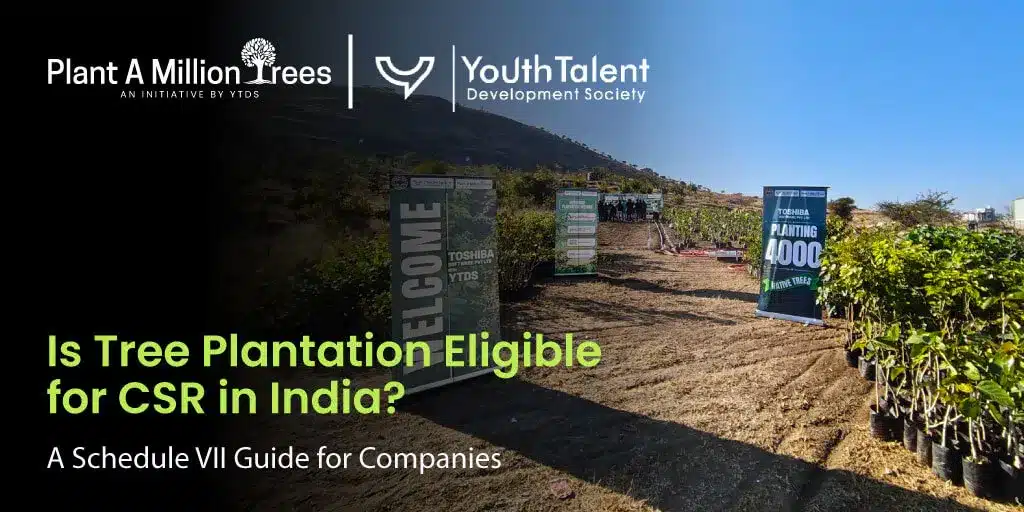
Tree plantation has become an important part of corporate environmental sustainability initiatives in India. Companies are funding plantation drives,...

Planting trees is easy to count. Measuring what those trees actually contribute to an ecosystem is much harder.
A company may report that it planted 5,000 saplings as part of its CSR initiative. That number is useful, but it does not tell the complete story. How many saplings survived? Were native species selected? Did the plantation create useful habitat for birds and pollinators? Is the soil retaining moisture better? Are the trees growing and developing a healthy canopy?
These questions are where biodiversity KPIs for CSR become important.
For companies investing in plantation projects, ecological impact should be assessed beyond planting-day numbers. Practical CSR biodiversity metrics can help CSR and sustainability teams understand whether a project is creating a healthier and more resilient landscape over time.
This approach also makes ecological impact measurement CSR projects more meaningful because it connects plantation activity with measurable environmental outcomes rather than treating the number of saplings planted as the final result.

Biodiversity KPIs are practical indicators that help companies track the ecological quality and progress of a plantation project.
They do not guarantee that a plantation will automatically produce a particular environmental outcome. Instead, they provide a structured way to observe, record, and evaluate changes over time.
For a corporate plantation project, useful indicators can include species diversity, sapling survival, early growth, habitat value, soil condition, and water-related indicators.
For example, imagine two plantation projects where each company plants 1,000 saplings. In the first project, most saplings belong to one species, survival is poorly monitored, and there is no maintenance plan. In the second, the project uses a mix of suitable native species, tracks survival, protects young trees, and monitors growth.
The planting count is identical. The ecological value may not be.
This is why biodiversity indicators for plantation projects should focus on what happens after planting.
One of the first indicators companies should consider is the diversity and suitability of the species being planted.
A plantation with a thoughtful mix of native or locally suitable species can support broader ecological functions than a project that relies heavily on a single species.

The project can record:
This is the foundation of native species diversity measurement.
However, diversity should not mean randomly planting as many species as possible. Species selection should consider the local climate, soil, water availability, space, and ecological characteristics of the site.
A CSR team should therefore ask its implementation partner why particular species were selected rather than simply requesting a long species list.
For example, if a plantation is located in an area with limited water availability, selecting species that require conditions the site cannot provide may reduce survival. The better approach is to create a species mix that is appropriate for the location.
In other words, biodiversity starts with the right trees in the right place.
Planting a sapling creates potential. Survival and growth determine whether that potential becomes an actual environmental asset.
This makes survival rate one of the most practical biodiversity KPIs for CSR plantation projects.
A company should not stop measurement after plantation day. Instead, survival can be assessed during scheduled monitoring visits.
The project team can track how many saplings remain healthy, how many have died, how many require replacement, and whether the surviving trees are showing healthy early growth.
Survival alone is not enough.
Two plantations could report the same survival rate while showing very different growth patterns. One may have healthy, developing trees, while another may have surviving but severely stressed saplings.
This is why companies can also observe indicators such as:
Canopy growth becomes particularly useful as trees mature because it provides an indication of whether the plantation is developing beyond the initial establishment phase.
The important principle is simple: ecological impact depends on living, growing trees, not planting-day numbers.
A plantation can provide more than tree cover. Depending on the species and landscape, it can contribute to habitat conditions for birds, insects, and other local biodiversity.
This makes habitat value an important part of tree plantation biodiversity impact assessment.
Companies do not need to promise that a plantation will immediately attract a particular number of birds or butterflies. Such outcomes depend on many factors, including the surrounding ecosystem, tree maturity, season, and availability of food and shelter.
Instead, CSR teams can monitor practical habitat indicators.
Projects can consider:
For instance, a plantation containing a suitable combination of trees that provide shade, flowers, fruits, or structural diversity may eventually offer more ecological value than a uniform plantation.
Pollinator habitat is one useful consideration. Similarly, bird-friendly trees can be included where they are suitable for the local environment.
However, companies should distinguish between creating habitat potential and claiming immediate wildlife recovery. A newly planted site cannot automatically be presented as a functioning mature ecosystem.
The responsible approach is to track habitat-related indicators over time and report observed changes conservatively.
Trees interact with the soil and water conditions around them, which means plantation monitoring should not focus exclusively on the trees themselves.
Practical indicators related to soil and water can help companies understand whether the plantation site is being maintained effectively.
Teams can observe factors such as:
Ground cover and mulch can help protect exposed soil and support moisture retention.
Water retention is another useful consideration, particularly during the establishment phase.
Companies can ask implementation partners how water is being managed, whether the site has adequate drainage, and whether young trees are receiving appropriate care during dry periods.
This is important because excessive water can also become a problem. Poor drainage and waterlogging can damage young saplings.
Therefore, ecological measurement should look at whether the plantation site is being managed appropriately rather than assuming that more water always means better growth.
These observations can become part of a broader ecological impact measurement CSR framework.
Good measurement is only useful when the information is recorded clearly.
CSR teams should establish the reporting framework before plantation execution begins. This allows the implementation partner to understand exactly what needs to be monitored.
A practical report can include the baseline condition of the site, species information, plantation photographs, survival observations, monitoring dates, and relevant habitat or soil observations.
A company should be able to answer basic questions such as:
Photographs can be particularly useful when they are linked to specific locations and monitoring dates.
Species lists can also help demonstrate how the plantation was designed to support diversity.
For ESG reporting, companies should avoid presenting estimates as confirmed environmental outcomes. For example, a plantation count should not automatically be converted into a precise carbon or biodiversity claim without an appropriate methodology.
Responsible reporting is more credible than exaggerated reporting.
For many companies, plantation is increasingly connected with broader sustainability strategies.
This makes biodiversity indicators useful not only for CSR teams but also for sustainability and ESG teams.
Instead of reporting only:
“10,000 trees planted.”
A stronger internal report can show:
“10,000 saplings planted across a defined site, representing a mix of locally suitable species, with survival and maintenance monitored through scheduled follow-ups.”
The second approach provides greater context.
Over time, companies can build a record of species diversity, survival rate, canopy growth, habitat observations, soil condition, and water-related indicators.
This can support more meaningful sustainability reporting because stakeholders can see how the project is being managed after the initial activity.
The important point is not to create unnecessarily complicated dashboards. The best CSR biodiversity metrics are those that the implementation team can consistently collect and the company can actually understand and verify.
A practical framework can begin before the first sapling reaches the site.
Document the plantation area’s existing condition.
Record relevant information about vegetation, site condition, soil, water availability, and surrounding land use.
This gives the company something against which future observations can be compared.
Do not attempt to measure everything.
For most corporate plantation projects, a practical set could include:
The exact indicators should depend on the size and nature of the project.
A KPI becomes useful only when it is measured consistently.
Companies should establish monitoring intervals with their implementation partner and document observations over time.
The first few monitoring periods are particularly important because they can identify problems early, such as damaged saplings, inadequate watering, poor drainage, or protection issues.
Photographs, species lists, monitoring notes, location records, and maintenance updates can strengthen the credibility of the report.
The aim is to create a clear trail from plantation planning to implementation and subsequent monitoring.
One of the biggest mistakes companies make is treating plantation numbers as the complete measure of impact.
A project may have planted thousands of saplings, but without survival and maintenance information, it is difficult to understand its actual performance.
Another common problem is selecting species based purely on availability or cost.
A low-cost sapling that is poorly suited to the site may create greater replacement and maintenance requirements later.
Companies should also avoid claiming immediate wildlife benefits from newly planted sites. Habitat develops over time.
Finally, reporting should not become unnecessarily complicated. A CSR team does not need dozens of scientific indicators if the implementation partner cannot collect them reliably.
The better approach is to select a small number of meaningful indicators and monitor them consistently.
Companies looking to build biodiversity-conscious plantation projects can benefit from implementation support that considers species selection, site planning, plantation execution, employee participation, maintenance, and reporting together.
Plant A Million Trees can support companies in designing plantation projects where ecological considerations are incorporated into the project from the planning stage.
As an initiative of Youth Talent Development Society, it can help companies approach plantation as a structured CSR activity rather than simply a one-day planting event.
For companies, the focus can remain on practical outcomes: selecting suitable species, establishing monitoring requirements, documenting plantation activity, and tracking progress after planting.
The objective is not to make every plantation project scientifically complex. It is to make the environmental impact easier to understand, monitor, and communicate responsibly.
They are practical indicators used to track the ecological quality and progress of a CSR plantation project. They can include species diversity, survival rate, growth, habitat value, soil health, and water-related indicators.
The number of saplings planted does not show how many established successfully. Tracking survival provides a more meaningful view of plantation performance and helps identify maintenance or replacement needs.
Companies can monitor native species diversity, survival and growth, habitat-related indicators, soil condition, water retention, and other site-specific observations over time.
Where relevant, biodiversity indicators can provide useful evidence of environmental performance. However, companies should report only information that can be reasonably measured, documented, and supported by a clear methodology.
A tree plantation project should not end with a planting count.
The real ecological story develops over the months and years that follow, when saplings survive, grow, develop canopy, support habitat, and interact with the surrounding environment.
Using biodiversity KPIs for CSR allows companies to move from simply measuring activity to understanding environmental progress.
The most useful indicators are not necessarily the most complicated ones. Species diversity, survival rate, canopy growth, habitat potential, soil health, and water-related observations can provide a practical foundation for monitoring.
For companies, the objective should be clear: design plantation projects that can be measured honestly, maintained consistently, and improved over time.
A well-planned plantation project does more than count trees,it creates a framework for measuring how those trees contribute to a healthier ecosystem.
Tree plantation has become an important part of corporate environmental sustainability initiatives in India. Companies are funding plantation drives,...
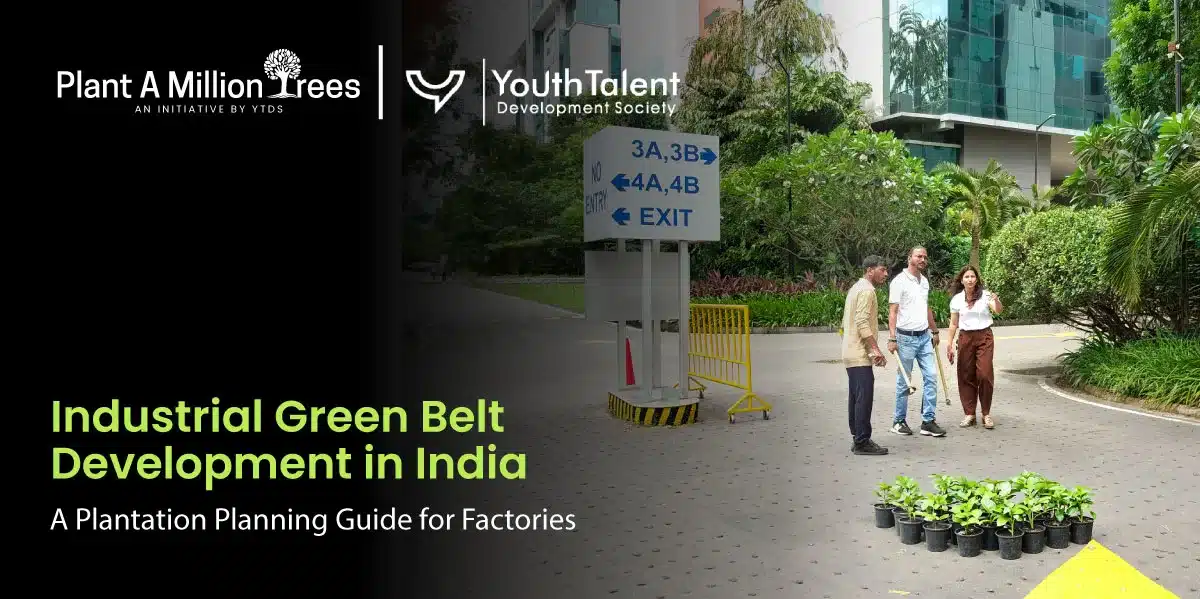
Industrial green spaces are often treated as rows of trees added around a factory boundary. In practice, effective green...
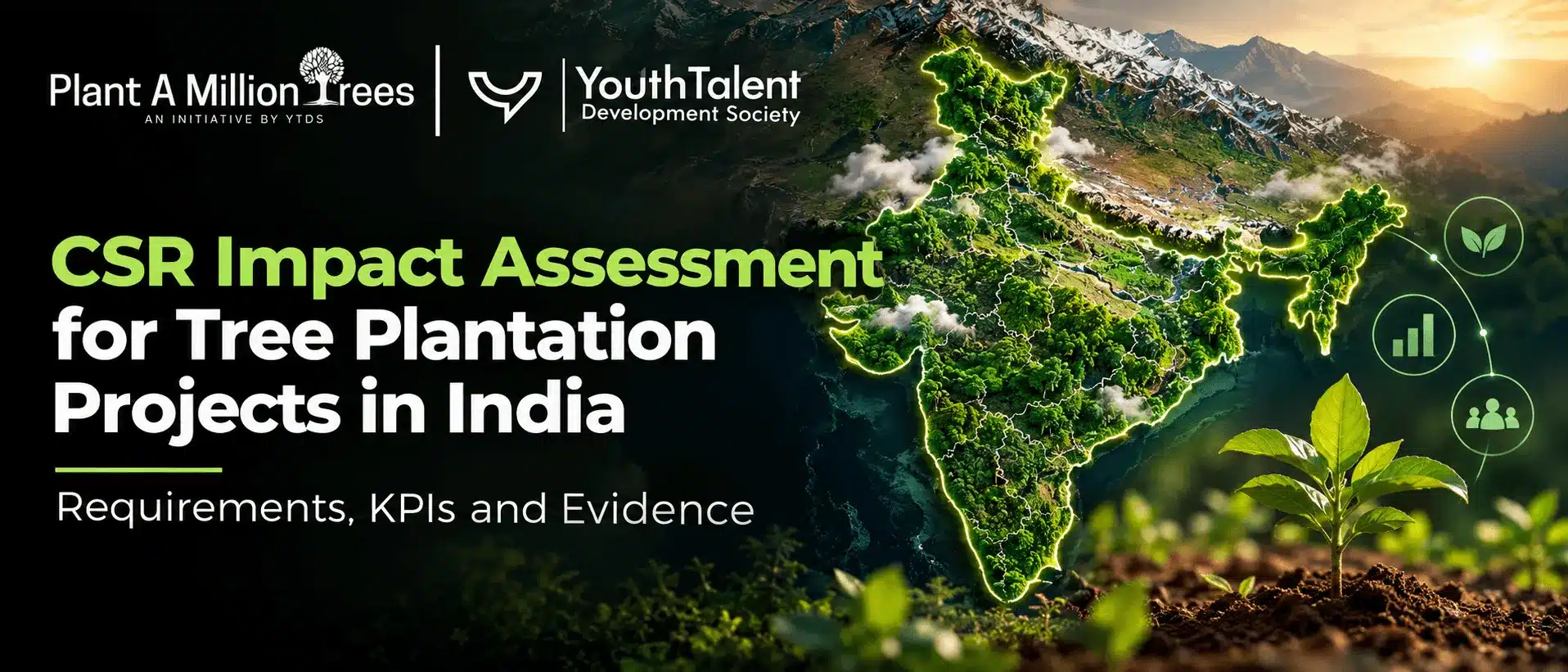
Planting trees is a visible CSR activity, but the number of saplings planted or photographs from a plantation event...