
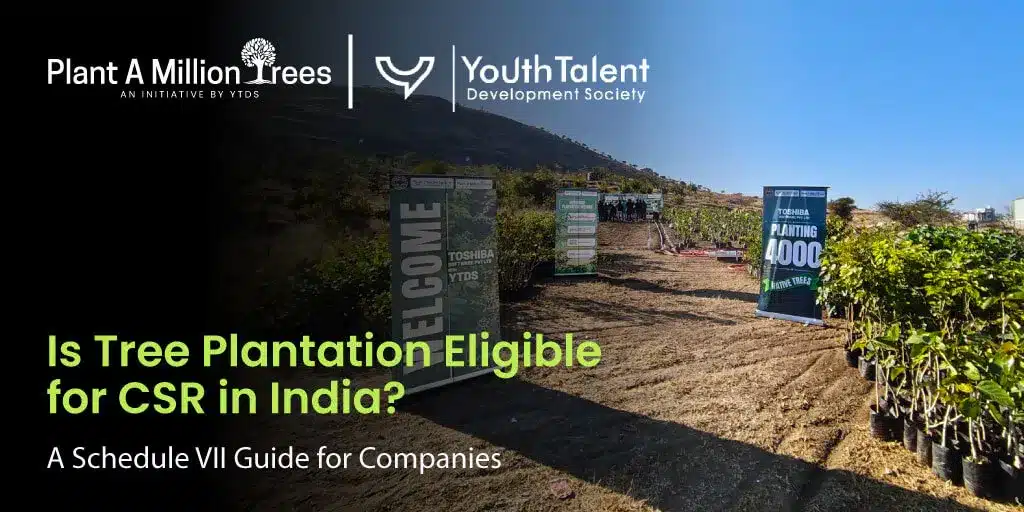
Tree plantation has become an important part of corporate environmental sustainability initiatives in India. Companies are funding plantation drives,...


A tree plantation activity can look simple from the outside: choose a location, bring employees, plant saplings, take photographs, and wrap up the day. For a company, however, a meaningful plantation project involves much more planning.
Pune is a practical setting for corporate plantation initiatives because of its concentration of businesses, offices, institutions, and growing urban and peri-urban green needs. This makes a corporate tree plantation drive in Pune relevant for companies looking to combine environmental action with employee participation.
But the success of a plantation drive should not be measured only by how many people attended or how many saplings were planted. Site suitability, permissions, native species, maintenance, employee safety, documentation, and long-term monitoring all matter.
For companies planning CSR tree plantation Pune initiatives, the right approach is to treat plantation as a project rather than a one-day event.
This guide is useful for companies that are considering plantation as part of their CSR, sustainability, employee engagement, or environmental programs.
It can help:
The requirements will differ depending on the purpose and scale of the project.
For example, an HR team planning a small employee plantation drive Pune may focus heavily on registration, transportation, safety, and employee engagement. A CSR team planning a larger multi-site project may additionally need detailed site approvals, plantation documentation, maintenance schedules, and CSR reporting.
The common requirement is coordination.
A well-planned project should make it clear who is responsible for the site, who will execute the plantation, who will maintain the saplings, and what evidence the company will receive after the activity.

Before approaching a plantation partner, companies should define what they actually want the project to achieve.
Start with the purpose of the plantation.
Is the company planning a CSR project, an employee volunteering activity, a sustainability initiative, or a combination of these?
The objective will influence the location, number of participants, plantation scale, documentation requirements, and budget.
A company should also decide whether the activity is intended as a one-time plantation event or the beginning of a longer-term environmental project.
Next, determine how many employees are likely to participate.
A group of 30 employees requires very different logistics from a group of 300. Registration, transportation, briefing, protective equipment, plantation tools, refreshments, and on-site coordination all need to be planned around the expected number.
It is also useful to divide participants into smaller groups during the activity so that volunteers are not crowded around the same planting area.
The budget should cover more than saplings.
Depending on the project, companies may need to account for:
A low initial cost may not always mean a better project. If maintenance is excluded, the company may save money at the beginning but achieve a much weaker environmental outcome later.
Location is one of the most important decisions in plantation site planning.
Companies should ask whether the proposed site is suitable for plantation and whether the required permissions have been obtained.
The project should also consider:
A beautiful-looking site is not necessarily a suitable plantation site.
CSR and sustainability teams should decide what information they need after the activity.
This could include plantation photographs, location information, species details, number of saplings planted, employee participation data, completion documentation, and follow-up updates.
Defining these expectations before the project begins makes CSR reporting much easier later.
If the plantation is taking place on land managed by a third party, the relevant permissions and responsibilities should be clarified before the event.
This is particularly important for public or community-managed locations.
A plantation should never proceed simply because a location appears unused or accessible.
Timing can influence plantation establishment, particularly in the early stages after planting.
For a corporate tree plantation drive in Pune, companies can consider the monsoon period because rainfall can support initial soil moisture and reduce dependence on irrigation during establishment.
However, monsoon plantation does not mean that saplings can simply be planted and left alone.
Heavy rainfall can also create challenges such as waterlogging, soil erosion, physical damage, or poor drainage. This is why the plantation plan should include site preparation and post-plantation care.
Companies planning monsoon plantation Pune activities should ideally coordinate the site, saplings, employee schedule, permissions, and maintenance plan before the plantation date.
The actual timing should depend on site conditions and local implementation advice rather than an assumed guarantee of survival.
A useful way to think about monsoon plantation is that the rain helps create favourable conditions, but proper planting and maintenance determine what happens afterward.
Once the timing and objective are clear, companies need to evaluate the site and species together.
A CSR tree plantation Pune project should prioritize suitability over simply selecting the most visually attractive trees.
The plantation partner should be able to explain why the proposed location is appropriate.
Companies should ask:
These questions can prevent problems after plantation day.
Where appropriate, companies should consider native trees Pune or species that are ecologically and climatically suitable for the selected location.
The exact species should depend on site conditions, soil, available water, surrounding vegetation, and professional advice.
A plantation project should not select species simply because they are inexpensive or easily available from a nursery.
Species selection also affects biodiversity and long-term survival.
This is why working with a credible tree plantation NGO in Pune or experienced implementation partner can be useful when the company does not have in-house ecological expertise.
The objective should be simple: choose the right tree for the right site.
A successful employee plantation drive Pune is as much about volunteer management as it is about planting.
The experience should be organized enough for employees to participate safely while still feeling meaningful.
Create a participant list before plantation day.
Registration helps the organizing team understand the expected number of volunteers and plan transportation, teams, tools, refreshments, safety requirements, and other logistics.
Before planting begins, volunteers should understand:
A short briefing can prevent confusion once everyone reaches the site.
Instead of allowing everyone to work in one area, create smaller teams.
One group can assist with sapling placement, another with planting, another with mulching or protection, and another with documentation, depending on the project plan.
This improves coordination and gives more employees an active role.
Plantation sites can involve uneven ground, tools, wet soil, and weather-related risks.
The company and implementation partner should establish basic safety measures appropriate to the location and activity.
Employee volunteering should be meaningful, but it should never come at the expense of participant safety.
The event can include simple engagement elements such as tree tagging, sustainability pledges, team activities, or photographs.
The key is to connect the activity with the larger environmental purpose.
Employees should leave understanding that the project continues after plantation day.

Plantation day is only one part of the project. After the activity, companies should expect clear documentation.
A strong corporate plantation drive Pune project can include:
Geo-tagging can be particularly useful because it helps connect plantation photographs and records with the actual site.
Companies should also be careful about environmental claims. Plantation numbers alone do not automatically demonstrate a specific carbon or ESG outcome.
Good reporting should focus on what has actually been completed and what can be verified.
For CSR teams, this makes documentation useful not just for internal records but also for future reporting and stakeholder communication.
Planning a plantation project independently can require coordination across several areas: site identification, species selection, employee participation, plantation execution, maintenance, and reporting.
Plant A Million Trees, an initiative of Youth Talent Development Society, can support companies looking to structure a plantation project around these requirements.
For companies considering a tree plantation NGO in Pune, discussions can cover the practical elements of the project, including plantation planning, employee drives, site coordination, implementation, and documentation.
This is particularly useful when a company wants its plantation activity to be more than a single employee event.
A structured partnership can help connect the plantation day with the larger project cycle, from planning and execution to maintenance and reporting.
Companies can therefore approach the initiative with specific requirements rather than treating plantation as a generic package.
Turn your employee plantation activity into a structured project covering site planning, suitable species, employee coordination, plantation execution, post-plantation maintenance and documented reporting.
Share your preferred Pune location, expected plantation scale, employee participation requirements and CSR objectives to discuss the right execution approach.
Plan Your Pune CSR PlantationThe monsoon can provide favourable moisture conditions for plantation, but companies should still consider site conditions, drainage, planting readiness, and post-plantation maintenance. There is no universal guarantee that planting during the monsoon will ensure survival.
Start by defining the objective, participant count, budget, location, permissions, plantation date, species requirements, employee logistics, safety arrangements, and reporting expectations. A plantation partner can then coordinate the implementation details.
Companies should evaluate the partner’s ability to support site selection, permissions, suitable species, plantation execution, maintenance, employee coordination, and documentation. The cheapest per-sapling option should not automatically be treated as the best option.
Companies can maintain records covering the plantation location, number of saplings, species, photographs, employee participation, geo-tagging where available, completion evidence, and subsequent survival or maintenance updates.
A corporate tree plantation drive in Pune can become a meaningful CSR and employee engagement activity when it is planned as a long-term project rather than a one-day event.
The strongest projects bring together the right site, suitable native trees Pune, trained implementation support, employee participation, safety, maintenance, and transparent reporting.
For companies, the goal should not simply be to count how many saplings were planted. It should be to understand what happens to those saplings after the plantation day.
Whether the project is a small employee volunteering event or a larger CSR tree plantation NGO in Pune for companies, thoughtful planning makes the difference.
A well-executed plantation drive gives employees a chance to participate directly in environmental action while giving the company a structured activity that can be documented, monitored, and connected to wider CSR goals.
If your company is planning a plantation initiative, start with the fundamentals: define the objective, select the right site, understand the maintenance requirement, involve employees effectively, and agree on reporting before planting begins.
The best corporate plantation drive is not the one that creates the biggest event, it is the one that creates a well-planned project with lasting value.
Tree plantation has become an important part of corporate environmental sustainability initiatives in India. Companies are funding plantation drives,...
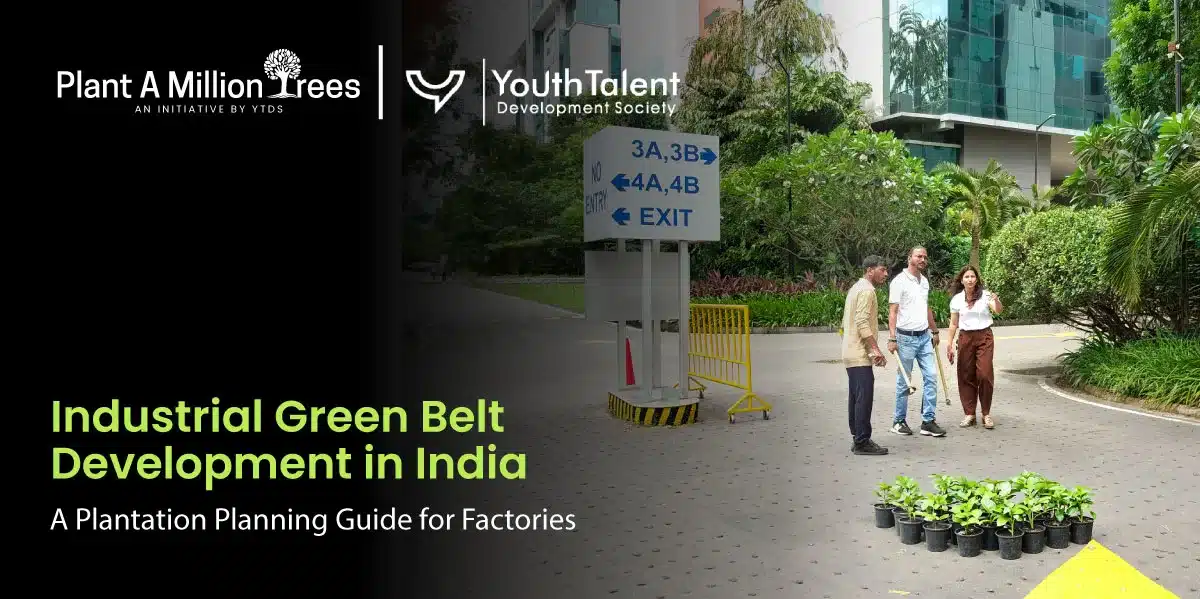
Industrial green spaces are often treated as rows of trees added around a factory boundary. In practice, effective green...

Planting trees is a visible CSR activity, but the number of saplings planted or photographs from a plantation event...