Planting trees is a visible CSR activity, but the number of saplings planted or photographs from a plantation event...

Walk into any modern workplace and you will hear a common sentiment from employees: they want to contribute to something meaningful.
While presentations, awareness campaigns, and donation drives continue to play an important role in Corporate Social Responsibility (CSR), many employees are increasingly looking for hands-on experiences where they can see the impact of their efforts. This is one reason why employee volunteering CSR tree plantation programs have become one of the most popular and effective CSR initiatives across India.
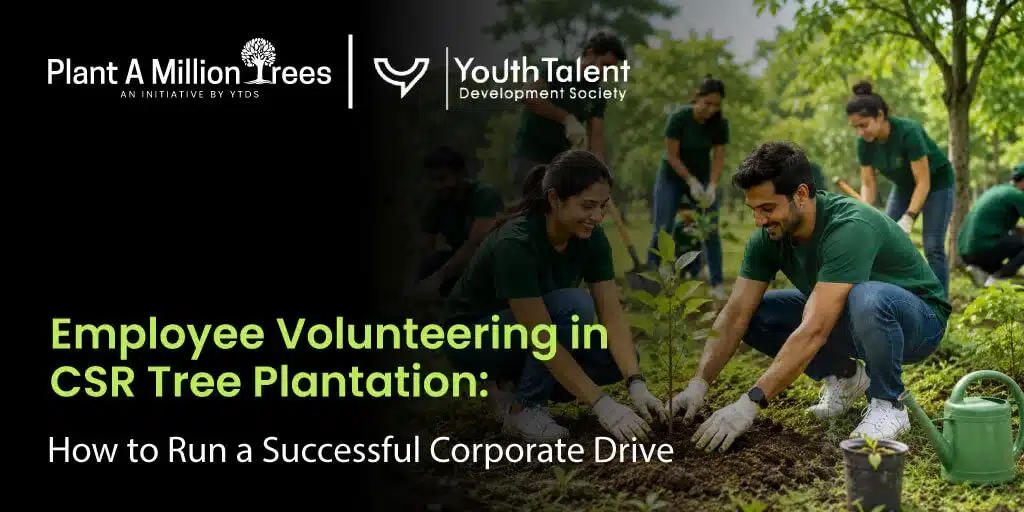
A tree plantation drive offers something unique. Employees step away from their desks, work together outdoors, engage with local communities, and contribute directly to environmental restoration. Unlike many CSR activities where outcomes may feel distant or abstract, planting and nurturing trees creates a visible, lasting connection between effort and impact.
However, organizing a successful plantation drive requires much more than selecting a date and arranging saplings. Without proper planning, coordination, and post-plantation care, even the most enthusiastic volunteer event can fail to create meaningful environmental outcomes.
This guide explores how organizations can design, execute, and sustain a successful corporate plantation program that benefits employees, communities, and the environment alike.
CSR has evolved significantly over the last decade. Companies are no longer judged only by the amount they spend on social initiatives but also by how deeply they engage employees in creating positive change.
Employee volunteering creates a direct connection between an organization’s values and its workforce. Instead of simply reading about sustainability goals in annual reports, employees become active participants in achieving them.
For employees, volunteering offers several benefits. It provides a sense of purpose beyond daily work responsibilities, encourages collaboration across departments, and helps build stronger interpersonal relationships. Many employees report feeling more connected to their organization when they participate in meaningful community initiatives.
For companies, volunteering strengthens culture and reinforces corporate values. Teams that work together outside traditional office settings often develop better communication and stronger trust. Participation in environmental initiatives also supports broader sustainability commitments and ESG objectives.
Communities benefit as well. Well-executed plantation programs can contribute to urban greening, biodiversity restoration, groundwater recharge, and climate resilience.
This combination of employee engagement, environmental impact, and social value explains why employee engagement CSR programs continue to grow across industries.
Not every volunteering activity creates the same level of engagement.
Tree plantation stands out because it combines visible impact with meaningful participation. Employees can see exactly what they are contributing and understand how their efforts connect to larger environmental goals.
Unlike short-term activities that conclude when the event ends, plantation projects continue to evolve over time. Employees can revisit sites, monitor growth, and witness the long-term results of their contribution.
A plantation drive also appeals to diverse groups within an organization. Some employees participate because they care about climate action. Others enjoy working outdoors or spending time with colleagues outside the office environment.
Many organizations discover that a well-designed CSR plantation activity becomes more than an environmental initiative, it becomes a culture-building experience.
There is also a strong emotional element involved. Planting a tree creates a personal connection that often lasts for years. Employees frequently remember the species they planted, the location, and the purpose behind the project.
When designed properly, a team building plantation drive can strengthen both environmental impact and workplace relationships simultaneously.
The success of a plantation drive is usually determined long before employees arrive on-site.
One of the most common mistakes organizations make is focusing primarily on the event itself rather than the preparation that precedes it.
Planning should begin several weeks, and ideally months, before plantation day.
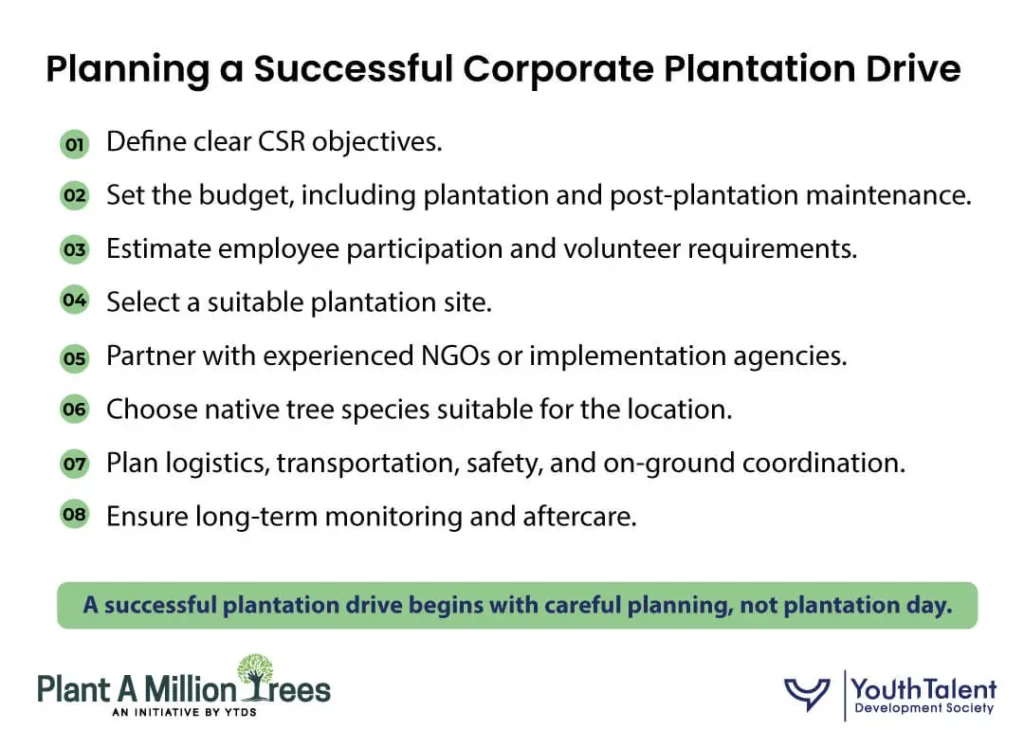
The first step is defining clear objectives. Is the goal employee engagement, biodiversity restoration, urban greening, groundwater recharge, ESG reporting, or a combination of these outcomes? Clear objectives influence every subsequent decision.
Next comes budgeting. Companies should account not only for saplings and plantation day logistics but also for maintenance, monitoring, and aftercare. Many organizations underestimate these long-term costs.
Participant planning is equally important. Understanding the expected number of volunteers helps determine transportation requirements, sapling quantities, site capacity, safety arrangements, and supervisory needs.
Partner selection also deserves careful attention. Whether working with NGOs, implementation agencies, or local authorities, organizations should prioritize partners with proven experience, strong survival records, and transparent reporting practices.
A successful plantation drive begins with careful preparation rather than last-minute coordination.
Location plays a major role in both volunteer experience and plantation success.
A site may appear suitable at first glance but create challenges during execution if accessibility, safety, or ecological suitability are overlooked.
Employees should be able to reach the location without excessive travel. Long journeys can reduce participation and affect overall engagement.
Safety considerations are equally important. The site should provide adequate space for movement, clear walking paths, and minimal exposure to hazards.
Ecological relevance matters as well. Plantation efforts should address genuine environmental needs rather than simply filling available land.
Before finalizing a site, organizations should evaluate:
Many successful corporate volunteering India programs prioritize sites where long-term monitoring and maintenance can be realistically achieved.
Tree selection is one of the most important decisions in any plantation project.
Employees often assume that all trees contribute equally, but experienced practitioners understand that species selection heavily influences survival rates and ecological value.
Native species should generally be prioritized because they are adapted to local conditions and support local biodiversity.
Species such as Neem, Jamun, Arjun, Pongamia, Kadamba, Banyan, and Peepal are frequently used in plantation programs across India because they combine resilience with ecological benefits.
When selecting species, consider:
A common mistake we see in corporate drives is choosing species based solely on visual appeal. While aesthetics are important, ecological suitability should always come first.
The guiding principle remains simple:
Right tree. Right place. Right purpose.
Even the best-planned plantation can become disorganized without proper volunteer management.
Employees often arrive enthusiastic but unfamiliar with plantation techniques, safety procedures, and site logistics.
A structured approach helps ensure both participation and impact.
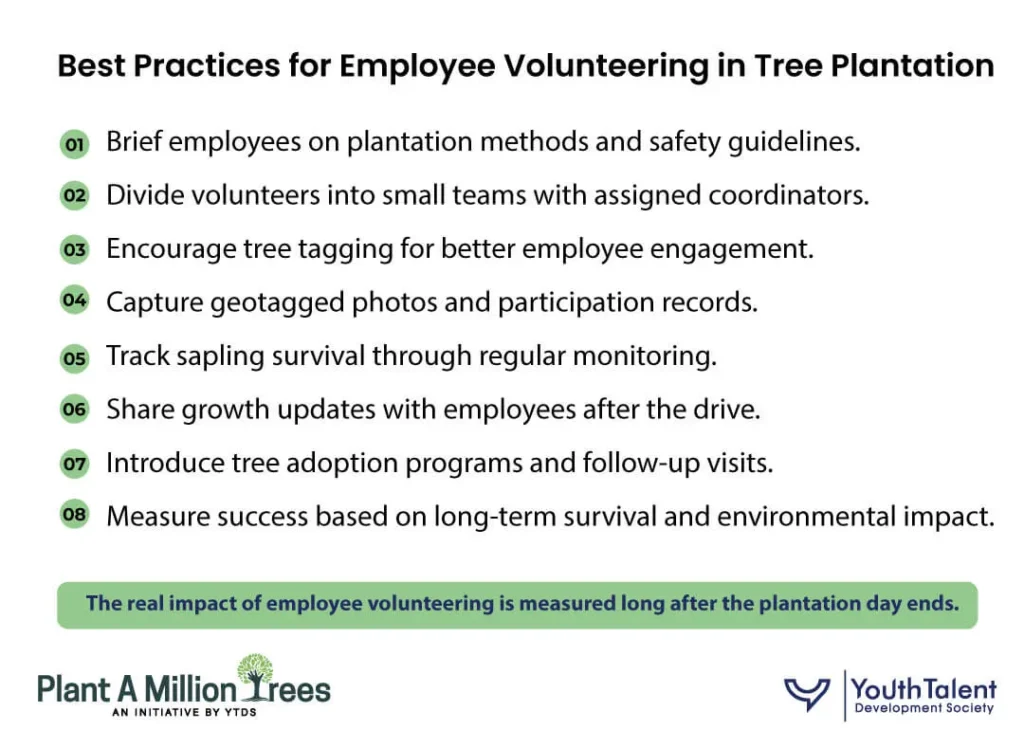
Registration should be organized efficiently to avoid delays. Volunteers should receive a clear briefing explaining project objectives, plantation methods, and safety guidelines.
Assigning employees to smaller teams often improves coordination. Team leaders can guide participants, answer questions, and ensure consistent planting practices.
Safety briefings are particularly important. Employees should understand proper tool handling, movement around the site, and emergency procedures.
Many organizations also benefit from assigning dedicated roles, including:
Strong coordination creates a smoother experience and increases the likelihood of successful plantation outcomes.
The most impactful volunteering experiences are not necessarily the largest ones.
Employee engagement often increases when participants feel personally connected to the activity.
Organizations can create this connection through simple but meaningful initiatives.
Tree tagging is one effective approach. Employees can associate their names with specific saplings and track growth over time.
Sustainability pledges can encourage participants to commit to additional environmental actions beyond plantation day.
Interactive learning sessions about biodiversity, climate change, or local ecosystems add educational value.
Photography booths, storytelling sessions, and friendly team challenges can further enhance engagement without distracting from environmental goals.
Many companies discover that memorable experiences generate stronger long-term commitment than large-scale events focused solely on participation numbers.
Modern CSR programs require strong documentation and reporting.
For plantation projects, documentation serves multiple purposes. It supports ESG reporting, demonstrates accountability, and provides evidence of implementation.
Photographs should capture:
Geotagging has become increasingly important for transparency and monitoring.
Organizations should also maintain records related to:
Strong reporting helps transform a plantation event into a measurable sustainability initiative.
One of the biggest missed opportunities in employee volunteering occurs after plantation day.
Many organizations conclude communication once the event is completed. However, long-term engagement often generates greater value than the event itself.
Providing periodic updates on sapling growth helps maintain employee interest.
Organizations can share:
Tree adoption programs are another effective strategy. Employees can remain connected to specific plantation zones and receive updates on progress.
Some companies organize annual site visits that allow participants to see the long-term impact of their contribution.
These efforts transform a one-day activity into an ongoing sustainability journey.
Plantation failures often follow predictable patterns.
One common issue is poor planning. Rushed decisions regarding sites, species, logistics, or partnerships frequently lead to avoidable problems.
Overcrowding is another challenge. Large volunteer groups without proper supervision can create confusion and inconsistent planting quality.
Unsuitable sites also contribute to poor outcomes. A convenient location is not always the right ecological choice.
Lack of aftercare remains perhaps the most significant problem. Many plantation projects receive substantial attention on plantation day but little follow-up afterward.
Other common mistakes include:
Organizations that avoid these pitfalls generally achieve stronger environmental and employee engagement outcomes.
It involves employees participating directly in plantation activities as part of a company’s CSR or sustainability initiatives.
Tree plantation creates visible environmental impact, supports employee engagement, and contributes to long-term sustainability goals.
The ideal number depends on site size, logistics, and supervisory capacity. Quality coordination is more important than participant volume.
Native species adapted to local conditions generally provide the highest survival rates and ecological benefits.
Growth updates, tree adoption programs, site visits, and impact reports help maintain long-term engagement.
Plantation success depends on survival. Without maintenance and monitoring, many saplings fail to establish themselves.
Tree plantation remains one of the most powerful ways to connect employees with sustainability in a tangible and meaningful way.
When planned thoughtfully, an employee volunteering CSR tree plantation initiative can strengthen employee engagement, support environmental restoration, and contribute to long-term corporate sustainability goals.
The most successful programs understand that plantation is not simply an event, it is a process that begins with planning and continues through maintenance, monitoring, and employee engagement long after plantation day has ended.
For organizations seeking meaningful impact, the goal should not be to organize the largest plantation drive. It should be to create a well-executed initiative that employees remember, communities value, and ecosystems benefit from for years to come.
When employees plant trees together, they grow more than forests, they grow purpose.
Planting trees is a visible CSR activity, but the number of saplings planted or photographs from a plantation event...
Corporate campuses are no longer viewed only as places where employees work or products are manufactured. Offices, factories, warehouses,...

A company with offices, factories, branches, or employee teams across India may want its environmental initiatives to reach multiple...