
“How much land do we need for 1,000 trees?” is one of the first practical questions CSR teams ask...

Environmental sustainability has become a key priority for businesses across India. Companies are increasingly investing in initiatives that not only fulfil their CSR commitments but also create measurable, long-term impact for communities and the environment.
Among the many environmental CSR activities available today, tree plantation continues to be one of the most effective. A well-planned plantation project can improve biodiversity, capture carbon, restore degraded land, engage employees, and strengthen a company’s ESG commitments, all while creating benefits that last for decades.
However, the success of a plantation drive isn’t measured by the number of saplings planted. It depends on careful planning, selecting the right native species, ensuring long-term maintenance, and achieving high survival rates.
In this guide, we’ll explore the best environmental CSR activities for companies in India, why tree plantation CSR stands out from other initiatives, and how organizations can build environmental projects that create lasting value for both people and the planet.
Environmental CSR refers to initiatives undertaken by businesses to reduce their environmental footprint while creating positive ecological and social outcomes. These projects go beyond legal compliance and demonstrate a company’s commitment to sustainable development.
Unlike traditional CSR activities that may focus primarily on education, healthcare, or community welfare, environmental CSR initiatives address challenges such as climate change, biodiversity loss, pollution, water scarcity, and land degradation.
For companies, these initiatives are becoming increasingly important because sustainability is no longer viewed as a separate function, it has become part of overall business strategy.
Well-designed CSR environmental activities can help organizations:
Support climate action and environmental restoration.
Contribute to national and global sustainability goals.
Strengthen ESG performance.
Build stronger relationships with communities.
Increase employee participation in meaningful projects.
Improve brand reputation and stakeholder trust.
The best projects are those that continue creating value long after the initial investment has been made.
For example, a well-maintained urban plantation may continue providing shade, cleaner air, biodiversity habitat, and carbon sequestration for decades. Similarly, watershed restoration projects can improve groundwater recharge and support local agriculture for years.
The objective is not simply to spend CSR funds but to create measurable environmental value.
Environmental responsibility has become a business necessity rather than a branding exercise.
Investors increasingly assess ESG performance before making decisions. Customers are more conscious about the environmental practices of the brands they support. Employees, particularly younger professionals, often prefer organizations that demonstrate genuine commitment to sustainability.
This means environmental CSR activities in India influence far more than environmental outcomes, they influence business performance as well.
One of the biggest advantages of environmental CSR is the trust it builds among stakeholders.
When communities see companies investing in projects that improve local ecosystems, restore public spaces, or increase green cover, those initiatives often strengthen long-term relationships and social goodwill.
Employee engagement is another significant benefit.
Many organizations have discovered that employees are far more enthusiastic about participating in hands-on environmental initiatives than passive awareness campaigns. Activities such as plantation drives, biodiversity restoration, or lake rejuvenation allow employees to see tangible results from their efforts.
Environmental CSR also supports long-term corporate resilience.
Projects that contribute to cleaner air, healthier ecosystems, improved water resources, or climate adaptation ultimately create healthier communities and stronger operating environments for businesses.
Perhaps most importantly, environmental initiatives demonstrate accountability. They show that an organization is willing to invest in long-term environmental improvement rather than focusing solely on short-term visibility.
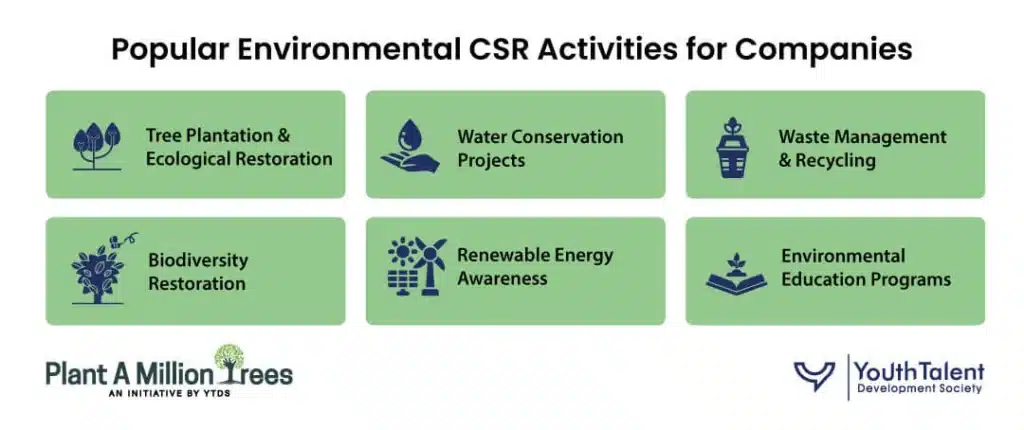
There is no single environmental initiative suitable for every organization.
The most effective CSR activities for companies depend on business objectives, available resources, community needs, and geographical context.
Some of the most impactful options include:
Tree plantation remains one of the most visible and widely adopted environmental CSR initiatives.
When implemented properly, with native species, suitable site selection, and long-term maintenance, it contributes to biodiversity restoration, carbon sequestration, groundwater recharge, and community greening.
Unlike symbolic plantation events, successful tree plantation CSR projects focus on survival rather than simply planting numbers.
Water scarcity affects many regions across India. CSR initiatives focused on rainwater harvesting, watershed development, lake restoration, recharge structures, and groundwater conservation create lasting environmental and social benefits.
These projects are particularly valuable in drought-prone regions where improved water availability directly supports local communities.
Waste segregation, recycling infrastructure, composting initiatives, and plastic reduction campaigns help reduce pollution while encouraging responsible resource management.
Companies can also support circular economy initiatives by partnering with local municipalities, resident welfare associations, or social enterprises.
Environmental CSR increasingly includes restoring natural habitats rather than simply increasing tree numbers.
Projects involving native species plantation, wetland restoration, pollinator gardens, or ecological corridors strengthen local biodiversity while supporting long-term ecosystem health.
Organizations also invest in solar-powered community infrastructure, clean energy solutions, and energy-efficient public facilities.
Although these projects may not involve direct employee participation, they create measurable environmental benefits over time.
Educational campaigns in schools, colleges, and communities encourage responsible environmental behaviour and support long-term cultural change.
These initiatives often complement practical conservation projects.
Each of these activities addresses a different environmental challenge. The most effective CSR strategies often combine multiple initiatives instead of relying on a single intervention.
Among all corporate social responsibility environmental activities, tree plantation continues to stand out because it combines visibility with measurable impact.
Unlike many environmental campaigns that conclude once the event ends, a successful plantation project continues generating benefits year after year.
Trees improve air quality, reduce urban heat, support biodiversity, stabilize soil, enhance groundwater recharge, and capture atmospheric carbon. Mature trees also improve public spaces, create shade, and contribute to healthier communities.
However, these outcomes are achieved only when plantation is treated as a long-term project rather than a one-day event.
A common mistake we see is organizations focusing primarily on plantation numbers.
Planting 10,000 saplings may appear impressive in an annual CSR report, but if most fail within a year, the actual environmental benefit remains limited.
Successful plantation projects look very different.
They begin with careful site selection. Native species are chosen based on ecological suitability rather than availability alone. Soil is prepared before plantation begins. Maintenance plans are budgeted in advance. Monitoring continues for months and often years after the event.
In other words, companies that achieve the greatest environmental impact understand that planting trees is only the first step.
Another reason plantation performs exceptionally well as a CSR initiative is its ability to engage multiple stakeholders simultaneously.
Employees participate directly through volunteering activities. Communities benefit from greener public spaces and improved environmental quality. Local biodiversity is strengthened through native species selection. Companies receive measurable outcomes that can support sustainability reporting and ESG initiatives.
Few environmental projects offer this combination of ecological restoration, employee engagement, community visibility, and long-term measurable impact.
For organizations seeking an initiative that aligns environmental responsibility with business value, tree plantation remains one of the strongest choices, provided it is planned, implemented, and monitored with the same discipline applied to any strategic business project.
One of the biggest challenges companies face isn’t deciding whether to invest in environmental CSR, it’s deciding where to invest.
Every organization has different priorities. Some want to contribute to climate action, while others focus on employee engagement, community development, biodiversity restoration, or ESG reporting. Choosing the right initiative means balancing these objectives with the actual environmental needs of the region.
Before launching any project, companies should ask a few important questions.
What environmental challenge are we trying to address? Is the project relevant to the local community? Can the impact be measured over time? Do we have the resources to maintain the initiative after it is launched?
Many organizations make the mistake of selecting activities based on visibility rather than long-term value. A highly publicized event may create temporary attention, but if it doesn’t continue generating benefits, its overall impact remains limited.
This is why environmental CSR should always begin with purpose rather than publicity.
Projects that improve ecosystems, strengthen communities, and remain sustainable over time create far greater value than initiatives designed solely for annual reporting.
Tree plantation is often described as one of the simplest CSR initiatives to organize. In reality, it is one of the easiest to get wrong.
Many companies assume that once saplings have been planted, the project is complete. Experienced plantation organizations know the opposite is true.
Plantation day is only the starting point.
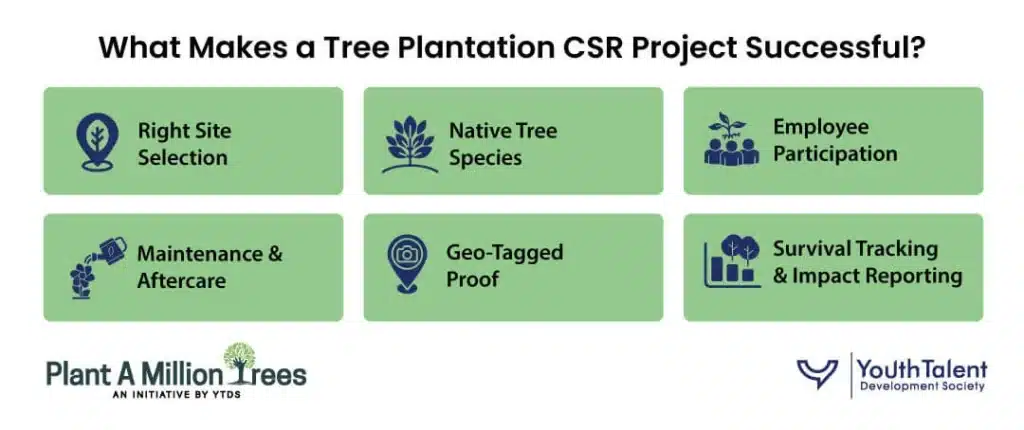
The success of a tree plantation CSR project depends on a series of decisions made before, during, and after the event.
The first is choosing the right location. A site with unsuitable soil, poor drainage, or limited protection can significantly reduce survival rates.
The second is selecting native species. Trees adapted to local climatic conditions establish themselves more quickly, require less maintenance, and provide greater ecological value over time.
Preparation is equally important. Proper pit digging, soil improvement, and logistical planning ensure that plantation day runs smoothly and gives saplings the best possible start.
However, what happens after plantation day often determines whether the project succeeds or fails.
Young saplings require watering during dry spells, protection from grazing animals, periodic inspections, and replacement where necessary. Organizations that budget for aftercare consistently achieve stronger survival rates than those that consider maintenance an optional expense.
Finally, every successful plantation project needs monitoring.
Instead of asking, “How many trees did we plant?” companies should ask, “How many trees survived?”
That simple shift changes the entire approach, from event management to environmental impact.
There is nothing wrong with organizing a one-day CSR activity.
Clean-up drives, awareness campaigns, and volunteering events can inspire employees and encourage community participation. The challenge arises when companies mistake participation for impact.
A one-day event creates awareness.
A long-term environmental project creates change.
Consider the difference between distributing reusable bags during an awareness campaign and restoring an urban biodiversity park.
The first creates a moment.
The second creates an ecosystem.
The same principle applies to tree plantation.
A plantation event may last a few hours, but a successful plantation project continues for years through maintenance, monitoring, and ecological growth.
Many companies discover that the most valuable CSR initiatives are those that employees and communities can revisit over time. Watching a plantation site grow into a thriving green space creates a much stronger connection than attending a one-day event that leaves no lasting legacy.
This doesn’t mean companies should stop organizing volunteering activities. Instead, those activities should become part of larger sustainability programs that continue delivering value long after the event has ended.
Employees today want more than opportunities to volunteer, they want opportunities to make a difference.
Environmental initiatives are particularly effective because they allow people to see the direct results of their contribution.
Planting a tree, restoring a lake, or participating in habitat restoration creates a sense of ownership that is difficult to achieve through awareness sessions alone.
This is one reason why employee volunteering has become an integral part of many corporate sustainability strategies.
Well-designed plantation drives also strengthen relationships within the workplace.
When colleagues work together outside the office environment, they communicate differently. Hierarchies become less visible, collaboration becomes more natural, and teams often build stronger personal connections.
Many organizations find that a plantation drive becomes both a corporate sustainability activity and an effective team-building experience.
The key is ensuring that employees understand why the project matters.
Explaining the environmental objectives, the importance of native species, and the long-term benefits of the plantation transforms participation into purpose.
Employees are far more likely to remain engaged when they know the story behind the sapling they planted.
Even organizations with the best intentions can make mistakes that reduce the effectiveness of environmental CSR initiatives.
One of the most common is prioritizing numbers over outcomes.
Large plantation targets may look impressive in annual reports, but if survival rates remain low, the environmental impact is equally limited.
Another mistake is selecting species based solely on availability rather than ecological suitability.
Planting native species adapted to local conditions almost always produces better long-term results than choosing fast-growing exotics for short-term visibility.
Companies also underestimate the importance of maintenance.
Without watering, protection, monitoring, and periodic inspections, young saplings remain vulnerable during their most critical years.
Another challenge is inadequate documentation.
Modern CSR projects should include geotagged records, survival data, biodiversity observations, and periodic progress reports. Transparent reporting not only strengthens ESG disclosures but also builds trust with stakeholders.
Finally, many organizations attempt to execute environmental projects independently without seeking expert guidance.
Working with experienced implementation partners significantly improves planning, execution, and long-term outcomes.
Successful environmental CSR projects rarely happen through corporate effort alone.
They require collaboration between businesses, environmental experts, local communities, and implementation partners who understand the complexities of ecological restoration.
The Youth Talent Development Society (YTDS), through its #PlantAMillionTrees initiative, works with organizations to design and implement plantation projects that focus on long-term environmental impact rather than one-day activities.
The approach goes beyond planting saplings.
Projects emphasize careful site selection, native species plantation, biodiversity restoration, post-plantation care, survival monitoring, and transparent reporting. This helps companies create measurable environmental outcomes while supporting broader sustainability and ESG goals.
Whether an organization is planning employee volunteering activities, large-scale CSR plantations, or long-term green infrastructure projects, experienced partnerships help ensure that investments translate into lasting ecological value.
Because ultimately, successful plantation isn’t measured by the number of trees planted, it is measured by the forests that continue growing years later.
Some of the most impactful initiatives include tree plantation, water conservation, biodiversity restoration, waste management, renewable energy projects, and environmental awareness programs. The right choice depends on local environmental needs and long-term business objectives.
Tree plantation creates lasting environmental benefits such as carbon sequestration, biodiversity conservation, cleaner air, improved soil health, and employee engagement. When properly maintained, it continues generating value for decades.
Organizations should focus on long-term planning, measurable outcomes, native species selection, community participation, and regular monitoring instead of treating CSR as a one-day event.
Environmental initiatives contribute to the environmental pillar of ESG by improving resource management, reducing ecological impact, supporting biodiversity, and providing measurable sustainability outcomes for reporting.
Employee involvement strengthens engagement, reinforces organizational values, and helps create a stronger connection between corporate sustainability commitments and everyday workplace culture.
Environmental CSR has evolved from being a compliance requirement to becoming a strategic investment in the future.
Companies are increasingly expected to create initiatives that not only address environmental challenges but also deliver measurable, long-term value for communities, employees, and the planet.
Among the many environmental CSR activities available today, tree plantation continues to stand apart because it brings together ecological restoration, employee participation, biodiversity conservation, and climate action in a single initiative.
However, the greatest impact comes when plantation is viewed as a journey rather than an event.
Organizations that invest in thoughtful planning, native species selection, long-term maintenance, and transparent impact measurement create projects that continue benefiting ecosystems for decades.
As businesses strengthen their sustainability commitments, the question is no longer whether they should invest in environmental CSR.
The real question is whether the projects they choose today will still be creating value years from now.
Because the most successful CSR initiatives don’t just fulfil a responsibility, they leave behind a living legacy.
“How much land do we need for 1,000 trees?” is one of the first practical questions CSR teams ask...
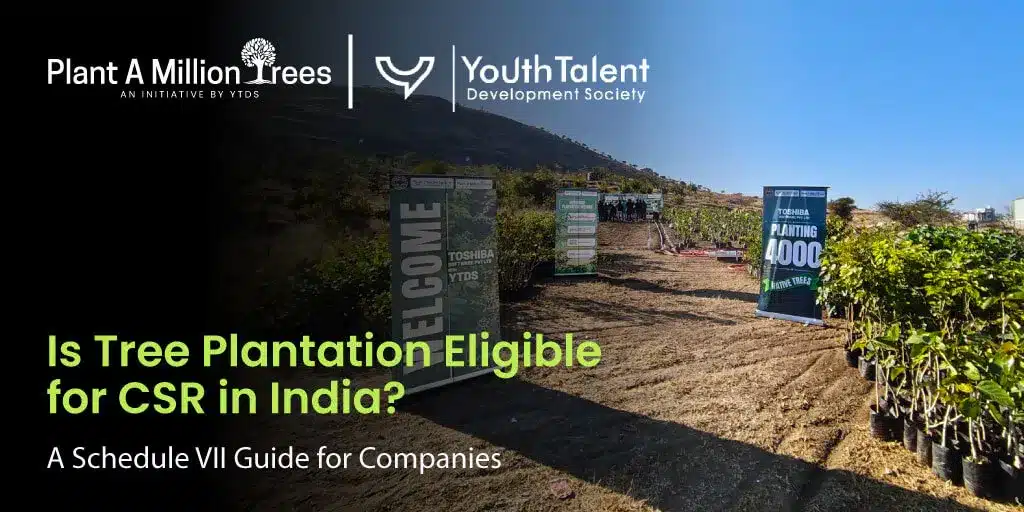
Tree plantation has become an important part of corporate environmental sustainability initiatives in India. Companies are funding plantation drives,...
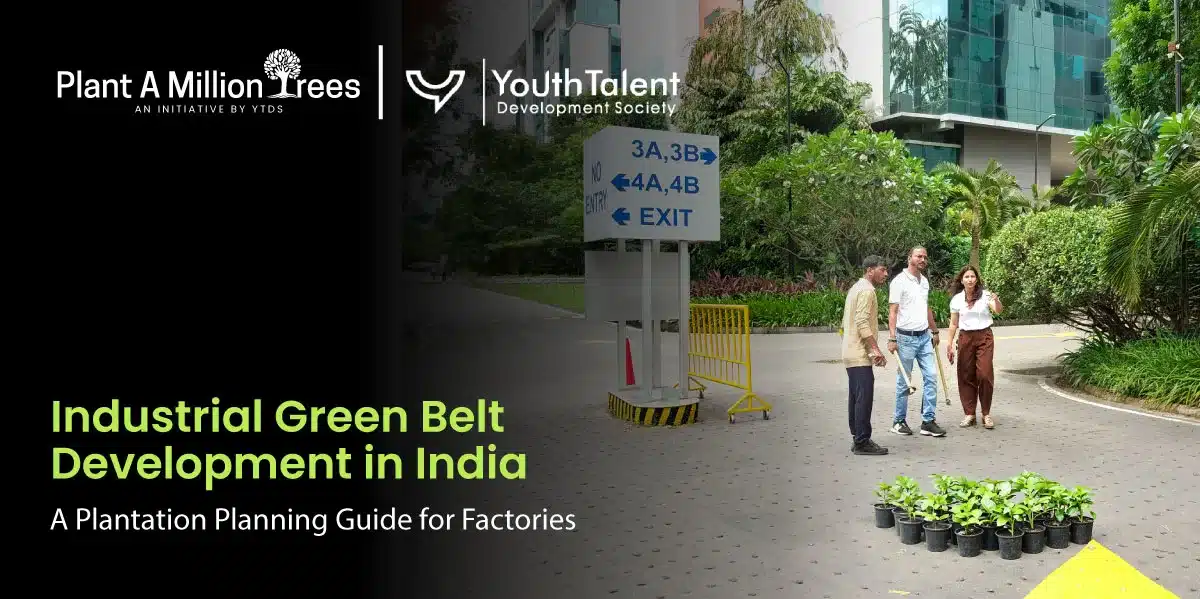
Industrial green spaces are often treated as rows of trees added around a factory boundary. In practice, effective green...