

“How much land do we need for 1,000 trees?” is one of the first practical questions CSR teams ask...

“Not all tree plantation drives are as green as they claim.”
Over the past decade, sustainability has become a central part of corporate branding in India. Companies are investing in environmental initiatives, especially tree plantation drives, to demonstrate climate responsibility and community engagement. On the surface, these efforts look positive, more trees planted, more green cover, more awareness.
But beneath the surface, a critical issue is emerging: greenwashing CSR India.
Greenwashing occurs when companies promote environmental actions that are either exaggerated, misleading, or not backed by real impact. In the context of plantation CSR, it often means reporting large numbers of trees planted without ensuring survival, ecological value, or long-term care.
As expectations around ESG transparency and accountability increase, companies can no longer rely on symbolic initiatives. Stakeholders, investors, regulators, and the public, are asking for proof, not promises.
This blog explains how to avoid greenwashing in tree plantation CSR in India, identifies red flags, and outlines practical steps for building authentic, impact-driven plantation programs.
Greenwashing in CSR refers to presenting environmental initiatives in a way that overstates their impact or hides their limitations. It creates the illusion of sustainability without delivering real environmental benefits.
In tree plantation CSR, greenwashing can take subtle forms. A company may report that it planted thousands of trees, but fail to mention how many survived. Another may highlight plantation drives without discussing species selection, maintenance, or ecological outcomes.
For example, a one-day plantation event conducted for visibility may be promoted as a major sustainability achievement, even if most saplings fail to survive within months.
These practices fall under false plantation claims, where reported impact does not match actual outcomes.
Understanding greenwashing is the first step toward avoiding it. Companies must recognize that sustainability is not about communication,it is about measurable, long-term impact.
Greenwashing in plantation projects is rarely intentional at first. It often begins with a focus on visibility rather than outcomes. Over time, this approach leads to systemic issues.
One of the most common patterns is one-day plantation drives. Companies organize large events, plant thousands of saplings, and generate media coverage. However, there is little follow-up care, leading to low survival rates.
Another issue is inflated plantation numbers. Saplings distributed or planted may be counted without verification, creating a gap between reported and actual figures.
Lack of aftercare is another major contributor. Without watering, protection, and monitoring, many saplings do not survive beyond the first season.
Poor species selection also leads to failure. Planting non-native or unsuitable species may result in low survival or limited ecological benefit.
These patterns collectively contribute to greenwashing CSR India, where activities are reported as impactful despite limited real outcomes.

Companies and stakeholders can identify greenwashing by looking for certain red flags.
Absence of survival data is a major warning sign. If reports mention only the number of trees planted without survival rates, the impact is incomplete.
Lack of monitoring details is another concern. Genuine projects include information about maintenance, inspections, and follow-up care.
Overemphasis on plantation events rather than long-term outcomes is also problematic. Sustainability is a process, not a one-day activity.
Vague claims without supporting data, such as “improved environment” or “significant carbon reduction,” should be treated cautiously.
No mention of species selection or site suitability may indicate poor planning.
These indicators help organizations and stakeholders distinguish between genuine initiatives and superficial efforts.
Greenwashing is not just a communication issue,it has real consequences.
From a business perspective, it damages credibility. Stakeholders increasingly value transparency, and misleading claims can lead to reputational risks.
From an environmental perspective, ineffective plantation projects waste resources. Funds that could have supported meaningful ecological restoration are spent on short-term activities.
Greenwashing also undermines trust in CSR programs. When stakeholders begin to question the authenticity of sustainability initiatives, it affects the broader ecosystem of corporate responsibility.
In the context of CSR accountability India, avoiding greenwashing is essential for maintaining both environmental integrity and corporate credibility.
To avoid greenwashing, companies must understand what real impact looks like.
First, survival matters more than planting numbers. A smaller plantation with high survival rates is more effective than a large plantation with poor outcomes.
Second, species selection must be appropriate. Native species adapted to local conditions provide better survival and ecological benefits.
Third, long-term care is essential. Watering, protection, and monitoring over multiple years ensure that saplings grow into mature trees.
Fourth, ecological benefits should be measurable. This includes carbon absorption, biodiversity improvement, and soil or water impact.
Finally, transparency in reporting builds trust. Sharing both successes and challenges demonstrates commitment to ethical CSR practices.
Real impact grows over time, not overnight.
Avoiding greenwashing requires a shift in approach,from activity-driven CSR to impact-driven CSR.
Start with clear objectives. Define what the plantation project aims to achieve, whether it is carbon sequestration, biodiversity restoration, or community engagement.
Invest in proper planning. Assess site conditions, soil quality, and water availability before planting.
Choose native species suited to the region. This improves survival rates and ecological value.
Focus on aftercare. Allocate resources for watering, protection, and maintenance over at least two to three years.
Track survival rates and other key metrics. This ensures that projects are evaluated based on outcomes.
Adopt transparent reporting practices. Clearly present data, assumptions, and limitations.
Engage local communities. Community involvement improves accountability and long-term care.
These practices align with sustainable plantation India principles and help companies deliver genuine environmental impact.
Monitoring and reporting play a critical role in preventing greenwashing.
Regular data collection ensures that plantation outcomes are tracked over time. Field visits, survival audits, and growth measurements provide valuable insights.
Technology enhances monitoring capabilities. GPS tagging helps track tree locations, while satellite imagery can assess vegetation cover.
Verification adds credibility. Independent audits or third-party assessments validate reported data and ensure transparency.
These practices form the foundation of ESG transparency and strengthen trust in CSR initiatives.
Companies that invest in monitoring and verification move closer to authentic, data-driven sustainability.
The choice of implementation partner can significantly influence project outcomes.
Companies should evaluate NGOs or vendors based on their experience, track record, and approach to sustainability.
Look for partners who emphasize survival rates rather than planting numbers. Check whether they provide monitoring data and long-term maintenance plans.
Transparency is key. Reliable partners share both successes and challenges openly.
Organizations like the Youth Talent Development Society (YTDS) often focus on long-term impact, emphasizing planning, monitoring, and community involvement rather than short-term plantation targets.
Choosing the right partner is essential for ensuring genuine impact and avoiding greenwashing.
It refers to misleading or exaggerated claims about plantation impact without real outcomes.
By focusing on survival rates, proper planning, long-term care, and transparent reporting.
Because it reflects actual impact rather than just planting activity.
Lack of survival data, vague impact statements, and no monitoring details.
Yes, accurate and transparent reporting is essential for credibility.
Tree plantation CSR has the potential to create meaningful environmental change,but only when done right.
In an era of increasing scrutiny, greenwashing CSR India is no longer sustainable. Companies must move beyond symbolic actions and focus on measurable impact.
By adopting ethical CSR practices, investing in planning and monitoring, and prioritizing transparency, organizations can build credible, effective plantation programs.
The difference is simple:
Real impact grows over time,greenwashing fades quickly.
“How much land do we need for 1,000 trees?” is one of the first practical questions CSR teams ask...
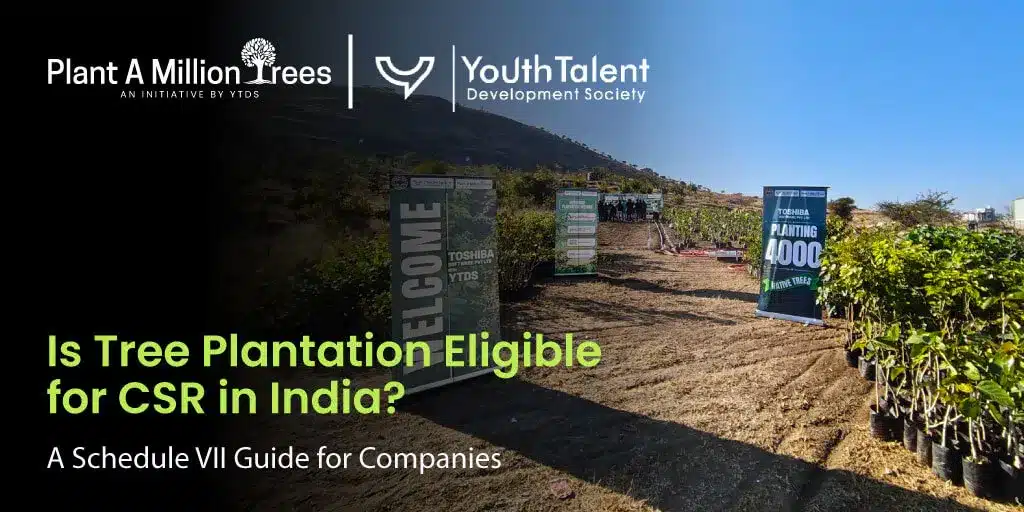
Tree plantation has become an important part of corporate environmental sustainability initiatives in India. Companies are funding plantation drives,...
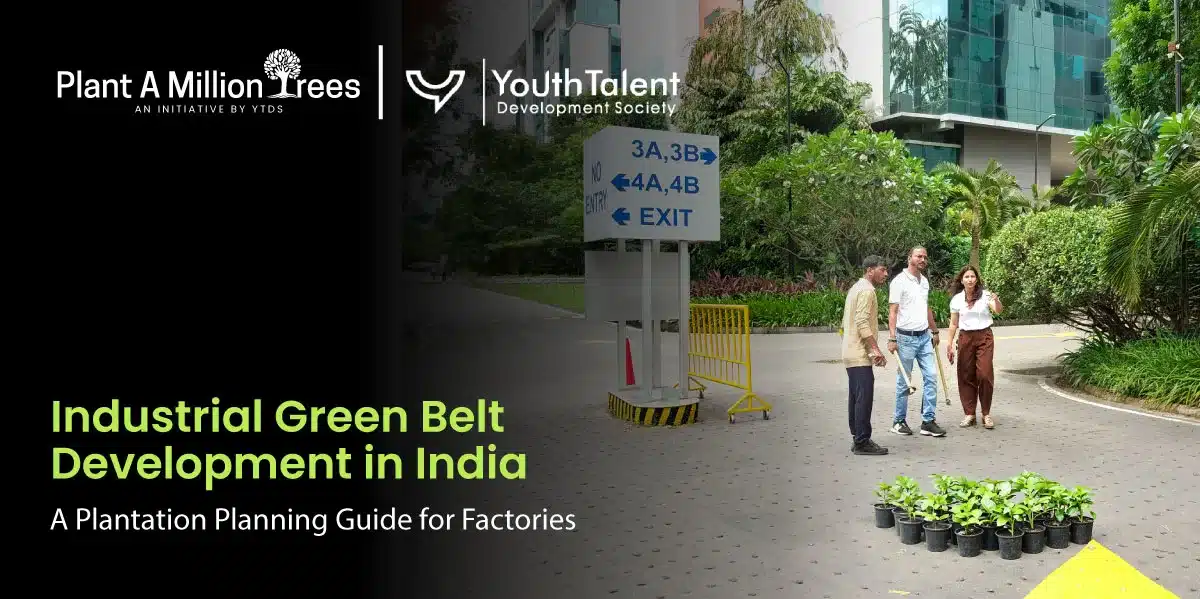
Industrial green spaces are often treated as rows of trees added around a factory boundary. In practice, effective green...