
“How much land do we need for 1,000 trees?” is one of the first practical questions CSR teams ask...

“CSR tree plantation costs can vary from ₹50 to ₹500+ per tree, why?”
This is one of the most common questions companies ask while planning environmental CSR initiatives. At first glance, tree plantation may seem straightforward: buy saplings, plant them, and count the numbers. But the reality is, the actual CSR tree plantation cost India depends on multiple factors: species selection, site preparation, labor, protection systems, and long-term maintenance.
Two plantation projects with the same number of saplings can have completely different outcomes and budgets. One may focus only on plantation day activities, while another may invest in aftercare, monitoring, and survival tracking. Naturally, the second project costs more, but it also delivers a stronger long-term impact.
This is why there is no universal “cost per tree.” The true question companies should ask is not “How cheap can plantation be?” but “What budget is required for survival and impact?”
In this blog, we’ll break down the full CSR plantation budget, explain major cost components, discuss realistic pricing ranges, and help companies understand how much does CSR tree plantation cost in India from a practical, outcome-driven perspective.
Many companies expect a standard plantation rate per sapling. Plantation cost is highly variable because every project is different.
Location is one of the biggest factors. Plantation on degraded land, hillsides, or dry regions requires more preparation and maintenance compared to fertile urban spaces or institutional campuses.
Species selection also influences pricing. Native species sourced locally may be more affordable and sustainable, while large ornamental or exotic species increases cost.
Project scale matters too. Large projects may reduce transportation and labor cost per tree through economies of scale, while smaller projects often have higher per-tree expenses.
Another major reason is maintenance philosophy. Some projects budget only for plantation day, while others include 1-3 years of watering, protection, and monitoring. The latter approach increases initial cost but significantly improves survival rates.
This is why tree plantation cost per tree should always be evaluated in context, not as a standalone number.
Cheap plantation does not necessarily mean effective plantation.
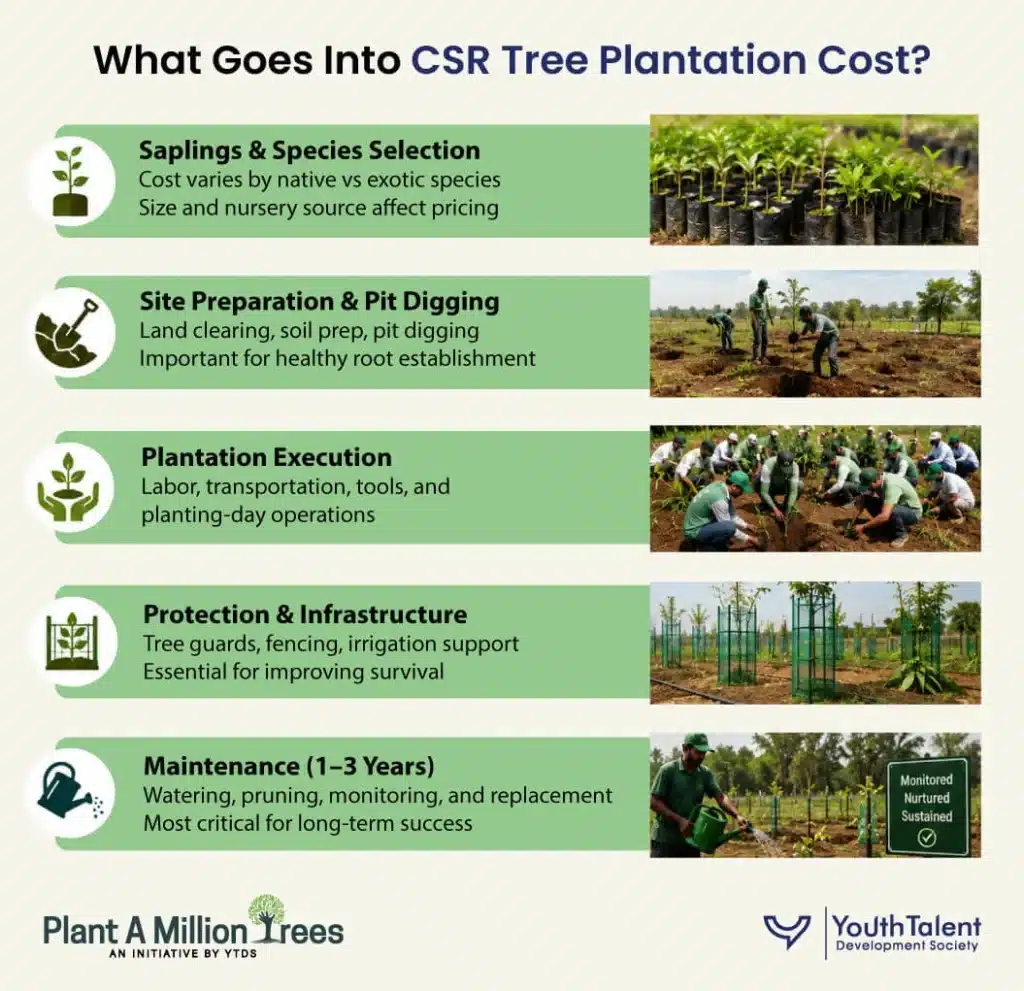
To understand plantation cost breakdown, companies must first understand the major cost categories involved in a plantation project.
A typical CSR plantation budget includes:
Each component contributes differently depending on project goals and geography.
For example, roadside plantations may require stronger protection infrastructure, while rural restoration projects may spend more on land preparation and irrigation.
Understanding these components helps organizations evaluate vendor proposals more realistically and avoid under-budgeting.
Saplings are the most visible cost in plantation projects, but they are only one part of the overall budget.
In India, sapling prices vary significantly based on species, size, and source. Small nursery saplings may cost ₹10-₹40, while larger or specialized species may cost ₹100 or more.
Native species are often more cost-effective in the long run because they adapt better to local conditions and require less maintenance. Exotic or ornamental species may appear attractive initially but can increase maintenance requirements and reduce survival rates.
Species size also matters. Larger saplings create immediate visual impact but cost more to transport and plant. Smaller saplings are cheaper and often establish roots more effectively.
For many projects, saplings account for only a fraction of the total CSR tree plantation cost India. Companies that focus solely on sapling prices often underestimate the true cost of successful plantation.
One of the most underestimated expenses in plantation projects is site preparation.
Before planting begins, the land must be assessed and prepared. This may include clearing debris, loosening compacted soil, improving drainage, and adding organic matter.
Pit digging is another major cost. Pit size varies depending on species and site conditions, but larger pits generally support better root establishment.
In difficult terrain or degraded land, preparation costs increase due to additional labor and equipment needs.
Proper site preparation is directly linked to survival rates. Poorly prepared land leads to weak root growth, waterlogging, or nutrient deficiencies.
This is why plantation cost breakdown must always include realistic budgeting for groundwork rather than focusing only on plantation day.
Plantation day involves multiple operational expenses.
Labor is one of the primary costs. Workers are needed for transporting saplings, digging final pits, planting, watering, and alignment.
Transportation costs depend on site location and project scale. Remote sites increase fuel and logistics expenses.
Tools and materials such as spades, pipes, water containers, and mulch may also be required.
In some projects, volunteer participation reduces labor costs. However, professional supervision is still essential to ensure correct planting methods.
Execution cost is important, but companies should remember that plantation day is only the beginning, not the entire project.
Young saplings are vulnerable to damage from grazing animals, human activity, and environmental stress. Protection measures therefore form a crucial part of the CSR plantation budget.
Tree guards are commonly used in urban and roadside plantations. Depending on material and design, guards can significantly increase per-tree cost.
Fencing is often required for larger plantations in open areas to prevent grazing damage.
Water infrastructure such as drip irrigation systems or storage tanks may also be necessary in regions with irregular rainfall.
Although these expenses increase short-term budgets, they dramatically improve survival rates and reduce future losses.
Protection should be viewed as an investment in survival,not an optional expense.
Maintenance is the single most important factor influencing plantation success.
Yet, it is also the most neglected component in many CSR projects.
Maintenance includes watering, mulching, pruning, pest management, survival monitoring, and replacing dead saplings.
The first two to three years are especially critical because young trees are highly vulnerable during this phase.
Depending on project scale and location, tree maintenance cost may exceed initial plantation expenses over time. However, this investment significantly improves long-term survival and ecological impact.
Projects without aftercare often show high mortality rates despite low initial costs.
This is why maintenance should never be excluded from budgeting discussions.
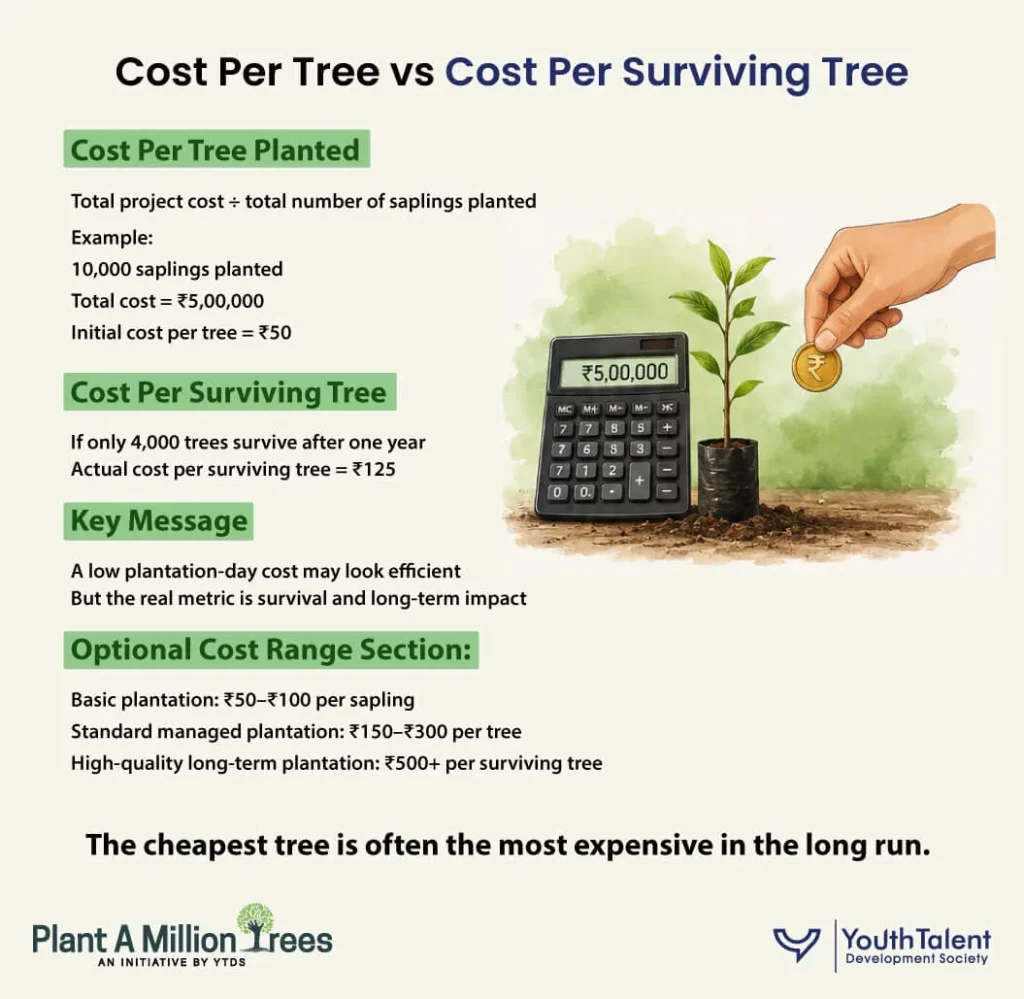
One of the biggest mistakes companies make is evaluating plantation solely based on cost per tree planted.
A project that plants 10,000 saplings at ₹50 each may appear efficient. But if only 30% survive, the actual cost of each surviving tree becomes much higher.
This is where cost per surviving tree becomes a more meaningful KPI.
For example:
A project spends ₹5,00,000 planting 10,000 saplings.
After one year, only 4,000 survive.
The actual cost per surviving tree becomes ₹125,not ₹50.
This metric shifts focus from quantity to quality and aligns plantation spending with real impact.
Companies should increasingly evaluate plantation projects based on survival outcomes rather than initial plantation numbers alone.
While there is no universal plantation price, some realistic ranges can help companies estimate budgets.
Basic plantation projects with minimal maintenance may range from ₹50-₹100 per sapling.
Projects including proper site preparation, protection, and limited aftercare may range from ₹150-₹300 per tree.
High-quality projects with long-term maintenance, survival monitoring, and strong protection systems may exceed ₹500 per surviving tree.
The key takeaway is that tree plantation cost per tree must always be linked to expected survival and impact.
The cheapest option is often the least effective in the long run.
Cost optimization does not mean cutting corners. It means investing strategically.
Start by selecting native species suited to local conditions. This reduces maintenance requirements and improves survival.
Plan plantations before the monsoon. Proper timing reduces irrigation costs and improves establishment.
Invest in site preparation and pit digging before plantation day. Good groundwork lowers mortality rates.
Engage local communities wherever possible. Community involvement improves protection and reduces long-term monitoring costs.
Choose experienced implementation partners who focus on survival rather than just plantation numbers.
Organizations such as the Youth Talent Development Society (YTDS) often emphasize long-term planning and maintenance, helping ensure that plantation investments translate into measurable environmental outcomes.
These strategies improve efficiency while maintaining ecological integrity.
Share your plantation location, expected scale and project requirements with our team to discuss a structured CSR plantation proposal covering execution, maintenance, monitoring and reporting.
Tell us what your company is planning and discuss the right plantation structure for your CSR requirements.
Request a CSR ProposalCosts can range from ₹50 to ₹500+ per tree depending on species, location, protection, and maintenance
Because factors such as site conditions, project scale, and aftercare significantly influence total cost.
Saplings, site preparation, labor, protection, maintenance, and monitoring.
Because survival depends heavily on watering, protection, and aftercare during the first few years.
It is the total project cost divided by the number of trees that survive after a defined period.
Tree plantation is not just a planting activity, it is a long-term environmental investment.
Understanding CSR tree plantation cost India requires looking beyond sapling price and considering survival, maintenance, and impact.
The most effective projects are not always the cheapest. They are the ones that prioritize planning, protection, and long-term care.
The takeaway is simple:
The cheapest tree is often the most expensive in the long run.
“How much land do we need for 1,000 trees?” is one of the first practical questions CSR teams ask...
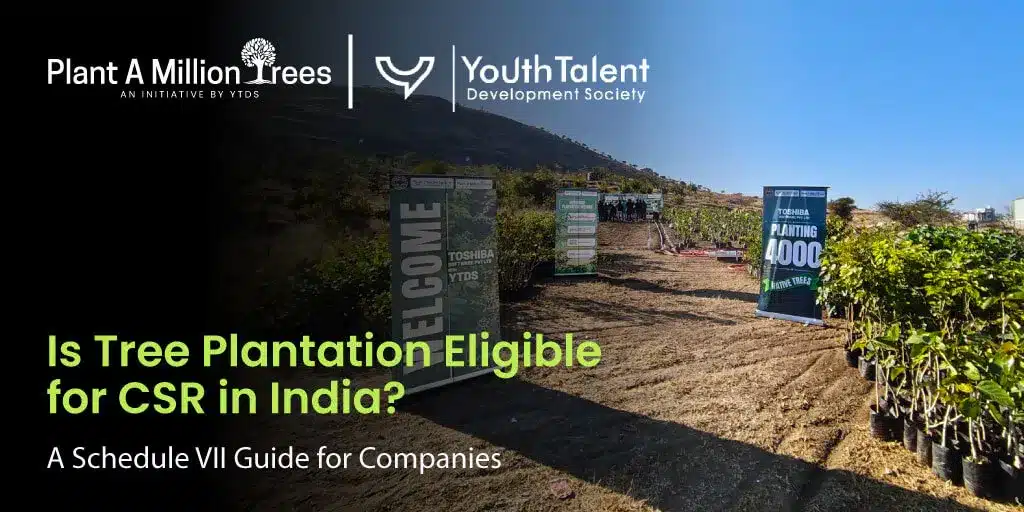
Tree plantation has become an important part of corporate environmental sustainability initiatives in India. Companies are funding plantation drives,...
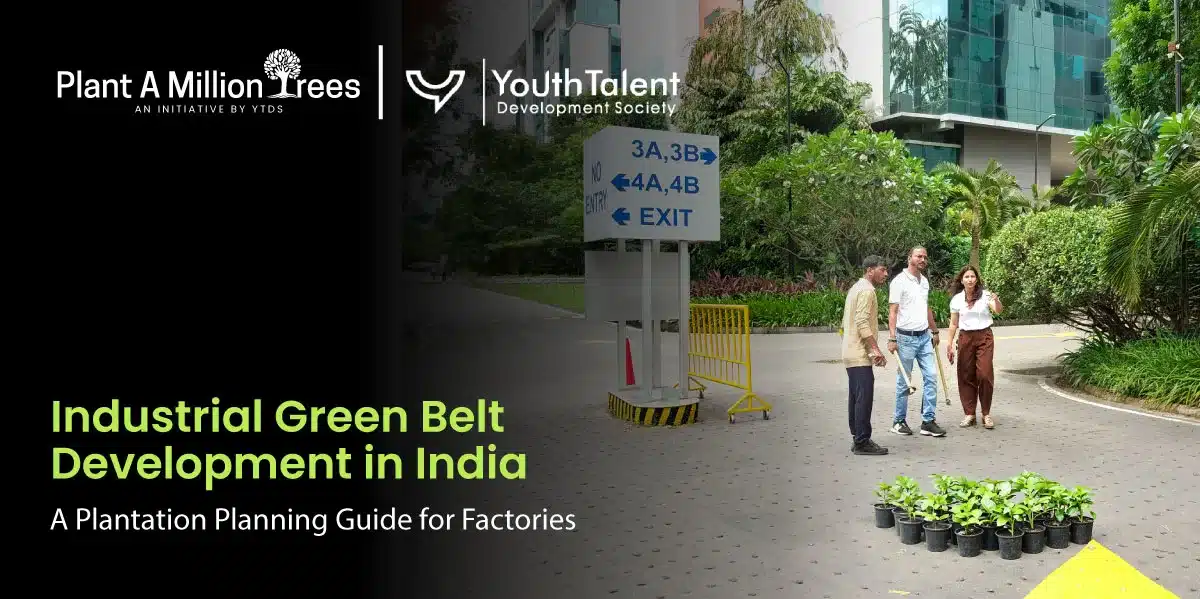
Industrial green spaces are often treated as rows of trees added around a factory boundary. In practice, effective green...